Feed Your Game
The opportunity
Feed Your Game arrived with the kind of idea investors claim they want and almost never fund: a category-defining operating system for athletes. Big vision, real ambition, and the single hardest setup in early-stage fundraising sitting right behind it. No product. No users. No revenue. Nothing an investor could open, click, or measure.
This is the quiet graveyard of pre-seed. The idea is enormous in the founder's head and invisible everywhere else. In the room it lands as talk, and talk does not move term sheets. Worse, FYG was pitching into a category thick with people promising the same future, most of them further along. A prettier deck was never going to be enough. The founders needed investors to believe in something that did not exist yet, believe it in minutes, and believe it over everyone else competing for the same check.


What we built
You cannot talk an investor into belief. You have to let them feel the company before it exists. So we stopped thinking like a design vendor and started building like a co-founder, engineering a system whose only job was to make a pre-product startup feel inevitable.
Every decision was reverse-engineered from the investor's brain. What do they need to see in the first ten seconds. Where does doubt creep in. What turns a skeptical scroll into a leaning-forward conversation. We built straight to those moments.
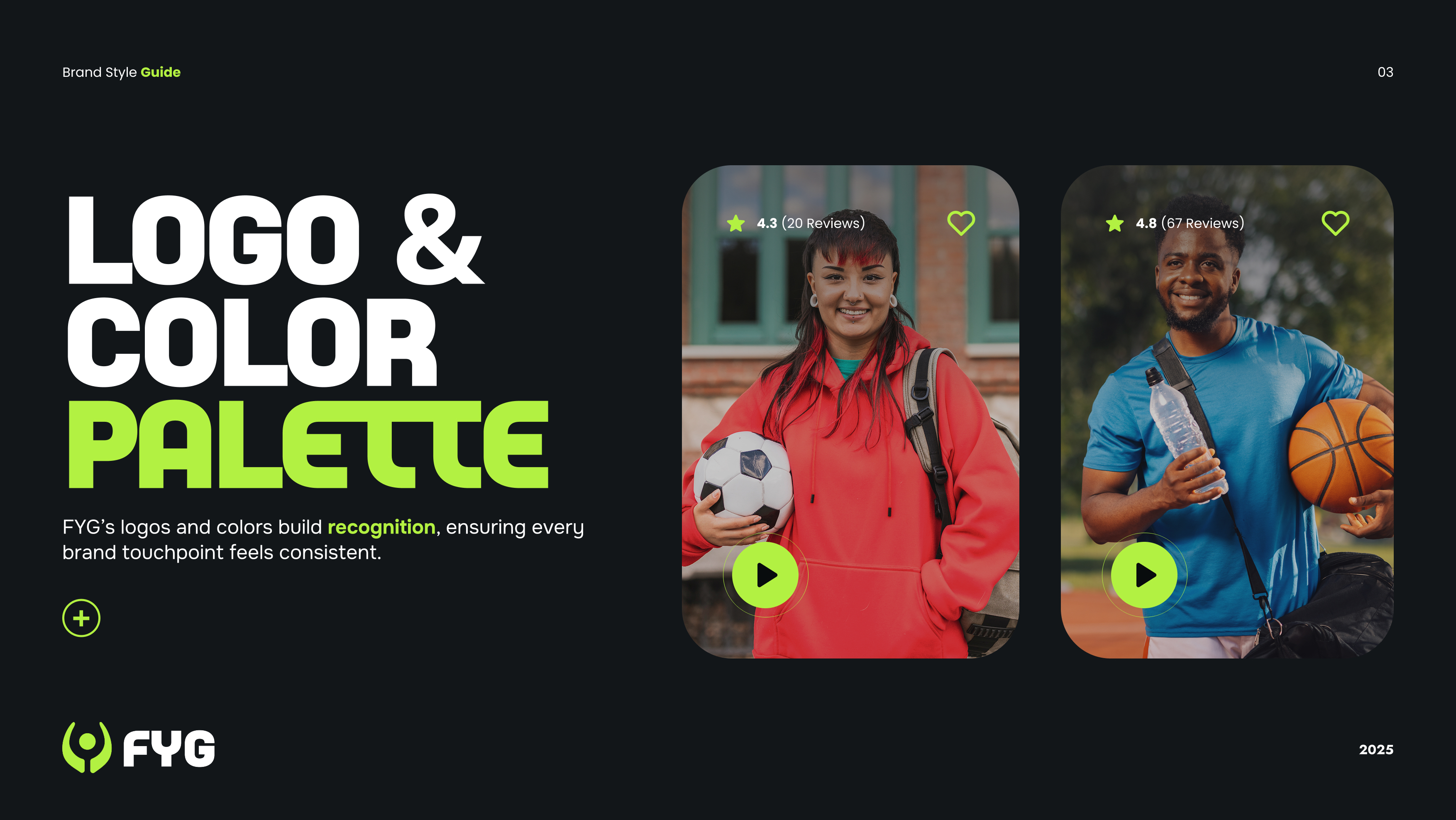
- a brand identity that made FYG read like a company that was already funded, not a weekend experiment
- an investor-grade pitch deck that framed the market the way the investor's own analyst would have, so the numbers felt like their conclusion, not our pitch
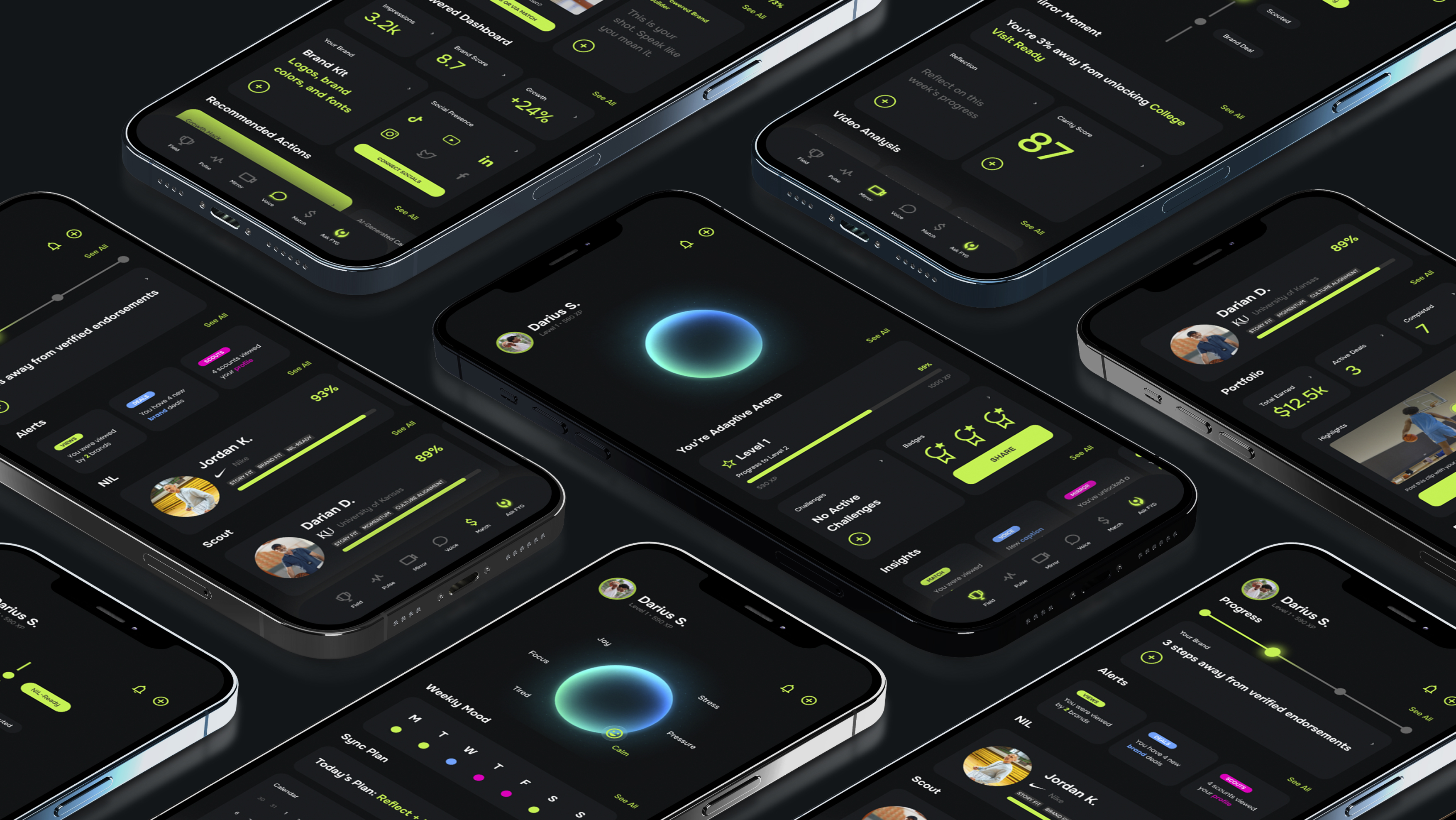
- an interactive prototype, the centerpiece, that let investors hold the product and move through it as if it had already shipped to thousands of athletes
- a unified visual system across every asset, so nothing felt improvised or early
- the full supporting kit the founders needed to walk into any room and command it
One job ran through all of it: erase the gap between the size of the vision and the size of the company in the investor's mind. Close that gap and a pre-seed founder stops sounding hopeful and starts sounding inevitable.
The outcome
A startup with nothing built walked into real investor meetings and got taken seriously, on the strength of brand, narrative, and a prototype alone. Not polite coffee chats. Working conversations with people who actually write checks, opened by work that made the idea feel real before a single line of product existed.
The raise is still live, and that is the part most agencies would bury. We lead with it. Getting a funded company in front of investors is ordinary. Getting a company with zero traction taken seriously by the people who fund the future is the entire demonstration. When there is no product to show, the story becomes the product, and FYG's story now opens doors a pre-revenue startup has no business opening.
That is the whole Key-Sprung thesis in one project: make founders look fundable before the fundamentals catch up, and buy them the runway to go build the real thing.